
Do You Need Protein Powder? What Most People Should Know
September 21, 2026
Walk into any gym, grocery store, or social media feed, and protein powder is hard to miss. Tubs line the shelves, influencers promote their favorite flavors, and it can start to feel like a scoop a day is part of a healthy routine. So, do you need protein powder? For many people, the honest answer is no. For others, it can be a helpful tool. The difference comes down to your body, your goals, and your health.
This guide walks through how much protein most adults need, when a powder may be worth considering, and what to know before you buy one.
Do You Need Protein Powder? What Most People Should Know
Walk into any gym, grocery store, or social media feed, and protein powder is hard to miss. Tubs line the shelves, influencers promote their favorite flavors, and it can start to feel like a scoop a day is part of a healthy routine. So, do you need protein powder? For many people, the honest answer is no. For others, it can be a helpful tool. The difference comes down to your body, your goals, and your health.
This guide walks through how much protein most adults need, when a powder may be worth considering, and what to know before you buy one.
What Does Protein Do in Your Body?
Protein is a building block for muscle, bone, skin, enzymes, and hormones. It supports recovery after exercise, helps you feel full after meals, and becomes more important with age as the body naturally loses muscle over time. Getting enough matters. The real question is whether you need a supplement to get there.
How Much Protein Do You Actually Need?
There is no one number that fits everyone. Your needs depend on your age, activity level, and health. For some people, eating less protein is actually the safer choice.
Healthy adults
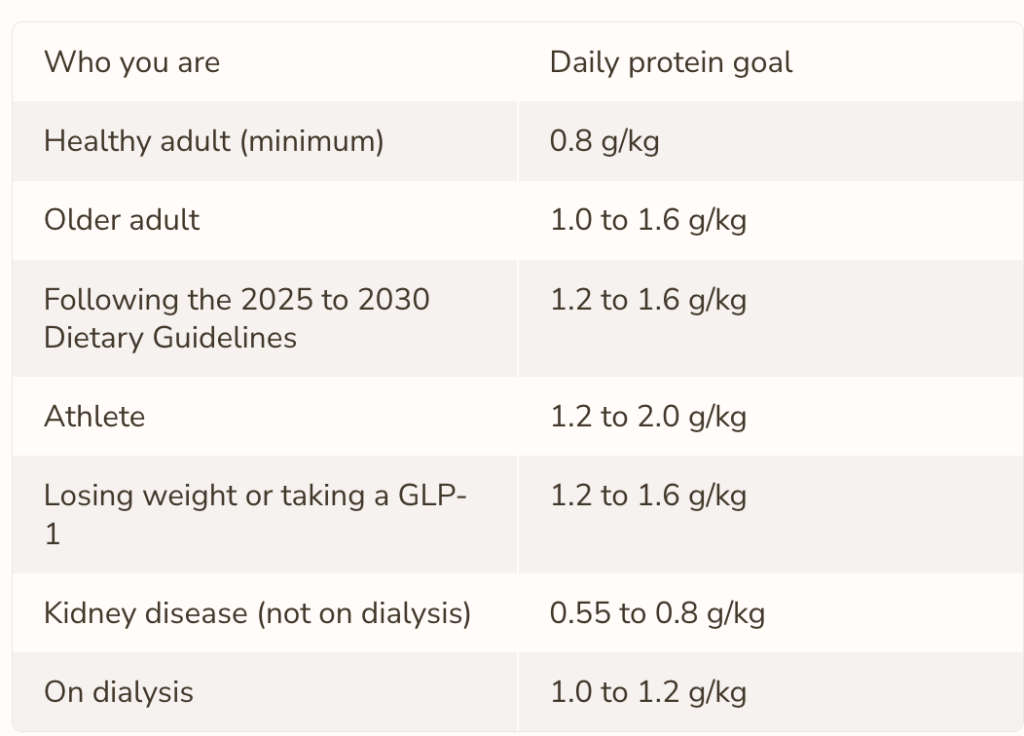
The standard recommendation of 0.8 g/kg is the minimum to prevent a deficiency. It is not the ideal amount. Many experts suggest 1.2 to 1.6 g/kg, and the newest Dietary Guidelines for Americans now use that range.
Not everyone agrees with the change. Some researchers point out that the evidence came mostly from weight-loss studies. Without strength training, extra protein has not been shown to build muscle. Too much protein may also raise the risk of belly fat and diabetes. In short, both too little and too much can cause problems.
g/kg means grams of protein per kilogram of body weight. To find your weight in kilograms, divide your weight in pounds by 2.2.
Older adults
Muscle naturally shrinks with age. Aiming for 1.0 to 1.2 g/kg can help slow that loss. In one study, people who ate about 1.1 g/kg lost about 40% less muscle over three years than those who ate about 0.7 g/kg.
Athletes
The American College of Sports Medicine recommends 1.2 to 2.0 g/kg. Going up to 2.0 or more can help during calorie cutting or injury. Aim for about 15 to 25 grams of protein at each meal, every 3 to 5 hours, including after workouts. Muscle gains seem to level off around 1.6 g/kg.
Weight loss or GLP-1 medications
Protein helps protect muscle and bone while you lose weight. The suggested goal is 1.2 to 1.6 g/kg, ideally based on your lean body mass rather than your total weight. Try not to drop below 0.4 to 0.5 g/kg. Strength training matters just as much as protein here.
Kidney disease
This is the one situation where less protein is usually recommended. Guidelines differ slightly:
- KDIGO: about 0.8 g/kg, and no more than 1.3 g/kg
- KDOQI: a lower range of 0.55 to 0.8 g/kg
- Dialysis: 1.0 to 1.2 g/kg, because the body loses more protein
Low-protein diets are not safe for everyone, including people who have muscle loss or poor nutrition. Always set a kidney protein goal with your nephrologist or dietitian.
Getting Protein From Food First
Whole foods bring more than protein alone. Animal proteins such as lean beef, poultry, and fatty fish also supply B vitamins, iron, zinc, and omega-3 fats, while a powder typically does not. Plant sources such as beans, lentils, nuts, seeds, and soy add fiber and other nutrients.
Harvard Health shows how quickly the numbers add up: an egg at breakfast, a serving of plain Greek yogurt at lunch, a handful of nuts as a snack, and a glass of milk with a small portion of chicken at dinner can cover the RDA. Harvard nutrition expert Dr. Walter Willett has also noted that almost any generally healthy diet, including a vegan one that features beans, nuts, and soy, provides adequate protein.
When Protein Powder Can Be Helpful
Protein powder is not harmful for everyone, and there are situations where it can fill a real gap.
Reduced appetite or difficulty eating.
Harvard Health lists impaired appetite from cancer treatment or frailty in older age as one situation where a protein powder may help, under medical supervision.
Healing and recovery.
The same source points to slow-healing wounds and serious conditions such as burns, where the body needs extra protein and calories.
Weight-loss medications such as GLP-1s.
These medications lower appetite, which can make it hard to eat enough protein. A 2025 joint advisory from leading obesity and nutrition organizations describes protein targets of 1.2 to 2.0 grams per kilogram of adjusted body weight during major weight reduction. The same advisory also offers a simpler option for adherence, an absolute goal of 80 to 120 grams per day spread over several eating occasions. Which body weight to use for the math is still debated, so individual guidance matters. Protein is only part of the picture. The advisory stresses that eating more protein alone is unlikely to protect muscle without structured resistance or strength training.
Restricted or very busy eating patterns.
Harvard Health notes that increasing protein is often achievable through food unless someone follows a restricted diet, such as a strict plant-based one. A Brigham and Women’s dietitian describes powders as fine supportive fillers, as long as people also eat plenty of protein-rich foods.
What to Know Before You Buy Protein Powder
If you decide a powder fits your needs, a few points are worth keeping in mind.
Labels are not verified by the FDA.
Protein powders are dietary supplements, and manufacturers are responsible for evaluating their own safety and labeling.
Added sugar and calories can climb.
Some products contain as much as 23 grams of added sugar per scoop, and a powder blended into a glass of milk can push a drink past 1,200 calories.
Contaminants are a real consideration.
In 2025, the Clean Label Project screened 134 protein powders for 130 types of toxins and found that many contained heavy metals, BPA, pesticides, or other contaminants, although not every product tested showed elevated levels.
Digestion varies.
People with a dairy allergy or lactose intolerance may have stomach discomfort with milk-based powders.
Long-term data is limited.
Researchers still know little about the effects of high protein intake from supplements over many years.
A practical approach is to choose a product with a short ingredient list, low added sugar, and an independent third-party testing seal, and to use it as a supplement to meals rather than a replacement for them.
When to Talk With a Clinician First
Check in with your healthcare provider before starting a protein powder if you:
- Have kidney disease or another condition that affects how much protein is safe for you
- Are pregnant or breastfeeding
- Take a GLP-1 or another weight-loss medication
- Are an older adult with a shrinking appetite or unplanned weight loss
- Are managing a chronic health condition
Harvard Health advises pregnant women to consult an obstetrician or dietitian first, since some protein powders contain added ingredients that may not be safe. Harvard Health
The Bottom Line
Do you need protein powder? Most healthy adults can meet their protein needs with everyday foods. A powder can be a convenient option for people with higher needs, a reduced appetite, or a limited diet, especially when guided by a clinician. What matters most is your total protein over time, the quality of your food, and strength-building movement.
If you are unsure how much protein is right for you, or you are taking a GLP-1 and want to protect your muscle, the team at NiuOla Health can help you build a plan around your goals. Text 360-382-2762 to schedule a visit with Dr. Tui Lauilefue, board-certified in Internal Medicine and Obesity Medicine.
This article is for educational purposes only and is not a substitute for personalized medical advice. Talk with your healthcare provider before making changes to your diet or starting a supplement.
