
No Gym Required: A Simple Bands-and-Bodyweight Workout Split You Can Do at Home
August 31, 2026
Not everyone has time for a gym membership, and not everyone wants one. Between work, family, and everything else on your plate, driving across town for a workout can feel like one more obstacle standing between you and your health goals.
The good news is you do not need a gym to build real strength. A few resistance bands, your own bodyweight, and a bit of floor space are enough to work every major muscle group in your body.
Here is a simple three day split you can do from your living room, and why it matters more than you might think.
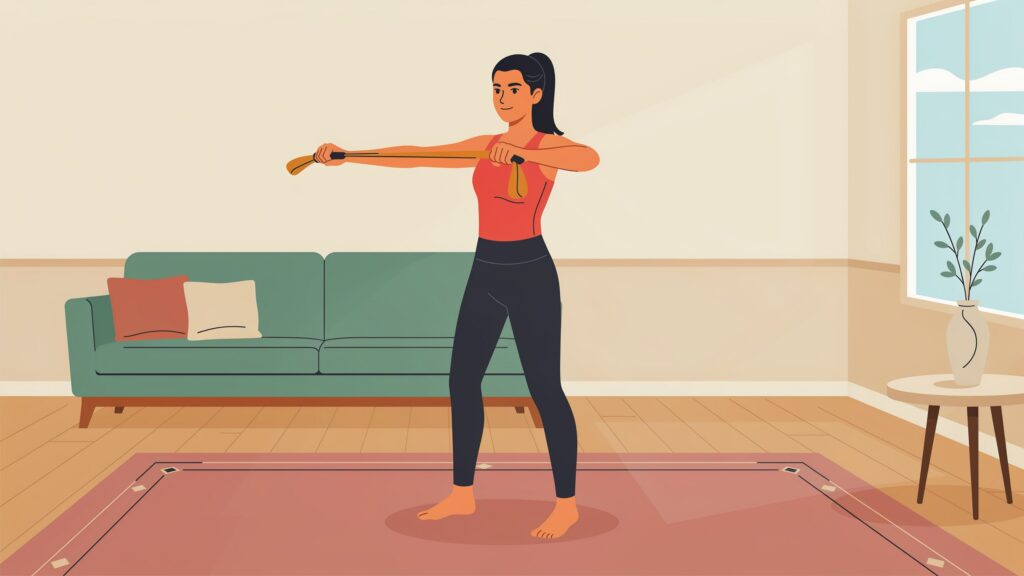
Why Home Strength Training Actually Works
Resistance bands are often underestimated. They provide continuous tension throughout a movement, which makes them just as effective as free weights for building strength when used consistently.
Muscle strengthening activities on two or more days a week that work all major muscle groups, including the legs, hips, back, abdomen, chest, shoulders, and arms, are part of the physical activity guidelines for adults. Bands and bodyweight movements can check every one of those boxes.
Benefits of training at home:
No commute, no waiting for equipment
Low cost compared to a gym membership
Easy to scale up or down as your strength improves
Works well for beginners and experienced exercisers alike
What You Will Need
- A set of resistance bands (light, medium, and heavy)
- A yoga mat or soft surface
- A sturdy chair or wall for balance support, if needed
- Comfortable clothing and shoes with good grip
That is it. No machines, no dumbbells required.
The Three Day Split
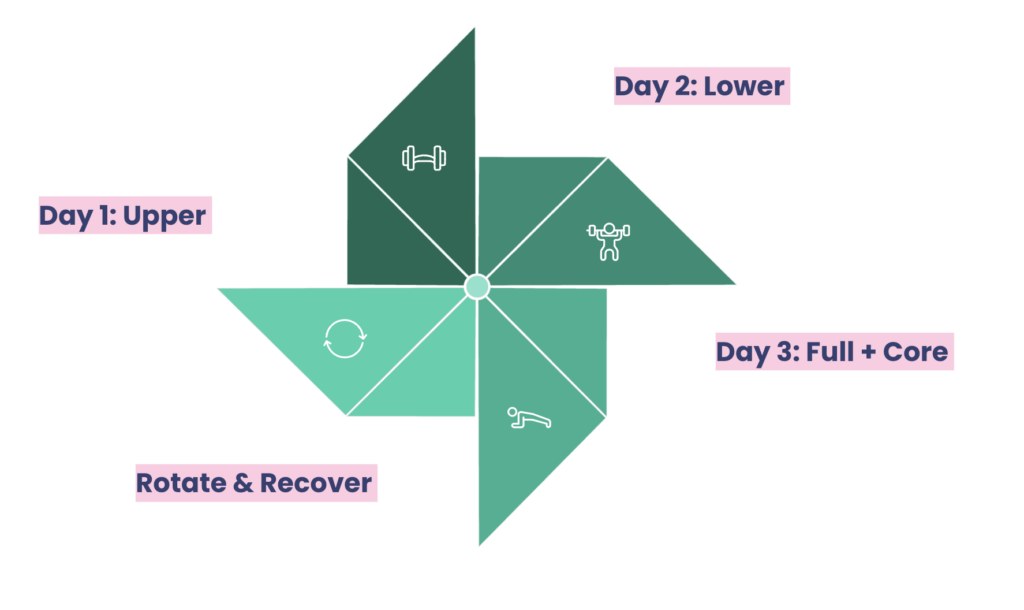
This split rotates through upper body, lower body, and a full body or core focused day. Aim for two to three sets of 8 to 15 repetitions per exercise. Most adults do well aiming for two to three sets of eight to twelve repetitions, with good form to make sure the right muscles are being worked safely.
Day 1: Upper Body
Band rows
3 sets of 12
Band chest press
3 sets of 12
Push ups (knee or standard)
3 sets of 8 to 12
Band bicep curls
2 sets of 12
Band overhead tricep extensions
2 sets of 12
Day 2: Lower Body
Bodyweight squats
3 sets of 15
Band lateral walks
3 sets of 12 per side
Glute bridges with band above the knees
3 sets of 15
Reverse lunges
3 sets of 10 per leg
Standing calf raises
2 sets of 15
Day 3: Full Body and Core
Band deadlifts
3 sets of 12
Plank
3 sets of 30 to 45 seconds
Band woodchoppers
2 sets of 12 per side
Bird dogs
2 sets of 10 per side
Dead bugs
2 sets of 10 per side
Rest one day between sessions, or fit all three into a week however your schedule allows. Consistency matters more than perfect timing.
Why This Matters if You Are on a GLP-1 Medication
If you are using a GLP-1 medication like semaglutide or tirzepatide as part of your weight management plan, strength training is not optional. It is one of the most important things you can do to protect your results.
Clinical trials have shown that roughly 30 to 40 percent of the weight lost on GLP-1 therapy can come from lean body mass rather than fat, which raises real concerns about long term muscle preservation and metabolic health. Once muscle mass is lost, it becomes very difficult to gain back, which is why resistance training alongside these medications matters so much.
Research consistently shows that people who pair GLP-1 therapy with structured resistance exercise are more likely to preserve lean muscle than those who do not, and even small amounts of strength training can make a meaningful difference.
This is exactly why a simple, sustainable band and bodyweight routine can be such a valuable part of a weight loss journey. You do not need an intense program. You need a consistent one.
Tips for Staying Consistent
- Keep your bands somewhere visible, not tucked away in a closet
- Pair workouts with something you already do, like right after your morning coffee
- Track your sessions in a simple notebook or app to see your progress
- Increase band resistance gradually as exercises start to feel easier
Give yourself grace on busy weeks. Something is always better than nothing
When to Get Personalized Guidance
Every body responds differently to exercise, medication, and lifestyle changes. That is where having a physician who actually has time for you makes a difference.
Every body responds differently to exercise, medication, and lifestyle changes. That is where having a physician who actually has time for you makes a difference.
At NiuOla Health
Dr. Tui Lauilefue, double board certified in Internal Medicine and Obesity Medicine, is a great resource for talking through how strength training fits into your weight management, GLP-1 treatment, or overall metabolic health. Whether you are just getting started or want to fine tune your current routine, it is a conversation worth having.
Get in Touch
Call us at 360-382-2762 to schedule a visit, or follow along on Facebook, Instagram, TikTok, and YouTube for more tips on nutrition, hormonal health, and sustainable weight management.
Disclaimer: As with any new exercise program, check with your doctor before starting, especially if you have an existing health condition, are pregnant, or are new to physical activity. This post is for general information and is not a substitute for personalized medical advice.
