
Hydration and Electrolytes: What You Need to Know on GLP-1 Medications
June 22, 2026
If you are taking a GLP-1 medication like semaglutide or tirzepatide, you have probably heard the advice to “stay hydrated.” But what does that actually mean and why does it matter more now than it did before? Understanding your body’s shifting needs can make a real difference in how you feel day to day.
Why GLP-1 Medications Affect Hydration
GLP-1 receptor agonists work by mimicking a naturally occurring hormone that regulates blood sugar and appetite. They slow gastric emptying and reduce hunger, both key to their effectiveness for weight loss and metabolic health. But those same mechanisms can quietly work against your hydration.
The Hidden Water Source
Most people get 20 to 30 percent of their daily water from food. When GLP-1 medications reduce appetite and food intake, that hidden water source disappears before most patients realize it.
A Compounding Effect
When appetite is suppressed, both food and fluid consumption tend to decline together. On top of that, GLP-1 medications may reduce thirst perception and increase the risk of dehydration, especially when gastrointestinal side effects are present.
The GI Side Effect Connection
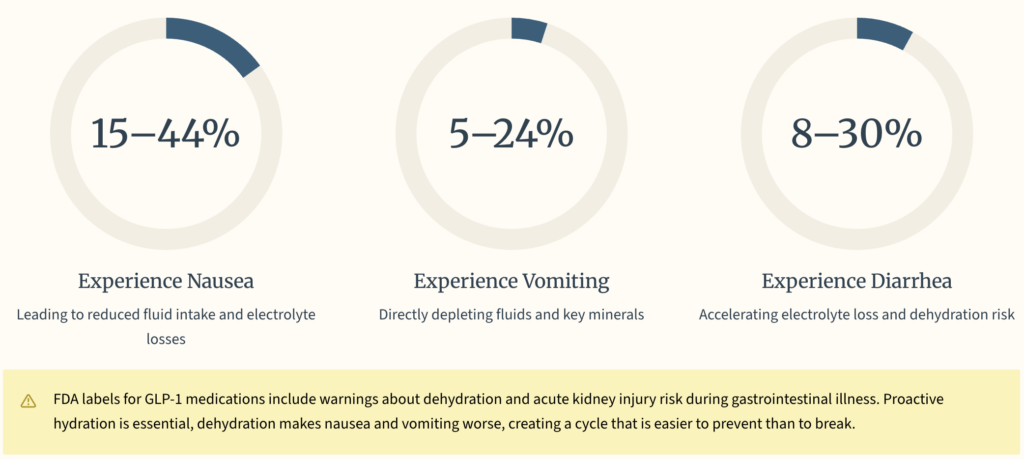
Nausea, vomiting, and diarrhea are among the most commonly reported side effects of GLP-1 therapy, particularly during dose escalation. These are not just uncomfortable experiences; they can directly deplete your fluid and mineral stores.
Hydration and Electrolytes: What You Need to Know on GLP-1 Medications
If you are taking a GLP-1 medication like semaglutide or tirzepatide, you have probably heard the advice to “stay hydrated.” But what does that actually mean and why does it matter more now than it did before? Understanding your body’s shifting needs can make a real difference in how you feel day to day.Schedule a ConsultationLearn More
Why GLP-1 Medications Affect Hydration
GLP-1 receptor agonists work by mimicking a naturally occurring hormone that regulates blood sugar and appetite. They slow gastric emptying and reduce hunger, both key to their effectiveness for weight loss and metabolic health. But those same mechanisms can quietly work against your hydration.
The Hidden Water Source
Most people get 20 to 30 percent of their daily water from food. When GLP-1 medications reduce appetite and food intake, that hidden water source disappears before most patients realize it.
A Compounding Effect
When appetite is suppressed, both food and fluid consumption tend to decline together. On top of that, GLP-1 medications may reduce thirst perception and increase the risk of dehydration, especially when gastrointestinal side effects are present.
The GI Side Effect Connection
Nausea, vomiting, and diarrhea are among the most commonly reported side effects of GLP-1 therapy, particularly during dose escalation. These are not just uncomfortable experiences, they can directly deplete your fluid and mineral stores.
Experience Nausea
Leading to reduced fluid intake and electrolyte losses
Experience Vomiting
Directly depleting fluids and key minerals
Experience Diarrhea
Accelerating electrolyte loss and dehydration risk
FDA labels for GLP-1 medications include warnings about dehydration and acute kidney injury risk during gastrointestinal illness. Proactive hydration is essential, dehydration makes nausea and vomiting worse, creating a cycle that is easier to prevent than to break.
What Are Electrolytes and Why Do They Matter?
Water is essential, but it is only part of the picture. Electrolytes are minerals, including sodium, potassium, magnesium, and calcium, that help regulate fluid balance, nerve signals, muscle contractions, and energy levels. Water hydrates; electrolytes help the body use that water effectively.
Sodium
The primary electrolyte for blood volume and cellular hydration. Low sodium impairs cellular energy production and is often linked to fatigue, brain fog, and dizziness upon standing. GLP-1 medications may promote natriuresis, the excretion of sodium in urine, increasing the need for intentional replenishment.
Potassium
Found inside your cells, potassium helps your nerves and muscles communicate. When you eat less, potassium intake decreases, making it harder to maintain consistent levels through diet alone. Low potassium often shows up as muscle weakness or cramping.
Magnesium
Supports muscle relaxation, nerve function, and energy metabolism. Muscle cramps, weakness, and persistent headaches are often tied to insufficient magnesium. Hypokalemia, hyponatremia, and hypomagnesemia are the most common electrolyte disturbances associated with GLP-1 therapy.
Signs You May Be Falling Behind on Hydration
Your body usually gives early warning signs before dehydration becomes serious. Many people on GLP-1 medications mistakenly attribute these signals to the medication itself, but addressing hydration first is always a reasonable first step.
Mild Warning Signs
- Thirst and dry mouth – Often the first signal your body sends
- Headaches and fatigue – Frequently mistaken for medication side effects
- Dark urine– A reliable visual indicator, aim for pale yellow
- Muscle cramps and constipation– Early dehydration signals common on GLP-1 therapy
Severe Symptoms? Seek Care
- Dizziness or lightheadedness
- Rapid heartbeat
- Confusion or disorientation
- Inability to keep fluids down
Do not push through severe symptoms. Contact your healthcare provider promptly if you experience these signs.
How Much Should You Be Drinking?
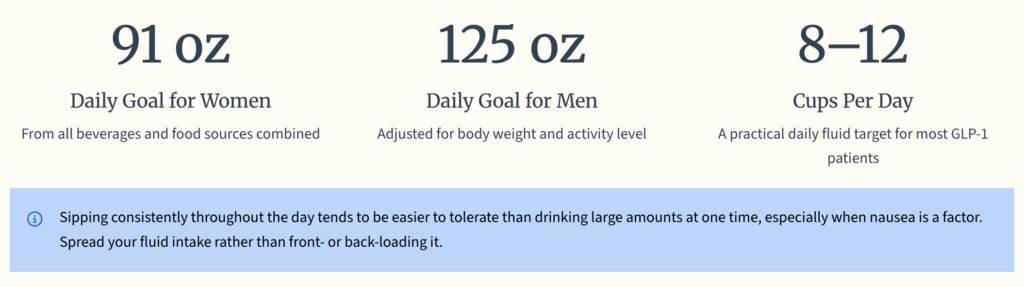
The National Academy of Medicine recommends 91 ounces daily for women and 125 ounces for men from all beverages and food sources under normal conditions. Those under fluid restriction should consult your provider directly for guidance. Patients on GLP-1 medications should aim for approximately 91 to 125 ounces of total daily fluid intake, with adjustments based on body weight, activity level, and gastrointestinal symptoms.
Foods and Strategies to Support Electrolyte Balance
Dietary sources of electrolytes should form the foundation of any replenishment plan. Even when appetite is reduced, small, intentional food choices can go a long way.
Potassium-Rich Foods
- Bananas and avocados
- Sweet potatoes and spinach
- Coconut water, edamame, black beans
Magnesium-Rich Foods
- Almonds, cashews, and seeds
- Dark chocolate and legumes
- Brown rice and tofu
Calcium Sources
- Yogurt and dairy products
- Oranges and fortified foods
- Leafy greens and tofu
Simple Daily Hydration Habits
Start your morning with water
Drink a full glass before coffee or food to begin the day ahead on hydration
Keep a water bottle visible
A visual cue throughout the day is one of the most effective reminders to drink
Infuse your water
Add lemon, cucumber, or mint if plain water feels unappealing due to nausea
Set reminders
Schedule hydration prompts during busy periods so drinking doesn’t slip through the cracks
Monitor urine color
Aim for pale yellow as a reliable, real-time indicator of good hydration status
For electrolyte supplementation, look for products that are low in sugar, contain a variety of electrolytes (not just sodium), and sit well on a sensitive stomach. A good GLP-1-friendly formula contains approximately 200–300 mg sodium, 100–200 mg potassium, and 50–100 mg magnesium per serving. Citrate-based formulas tend to be gentler on the digestive system.
Supporting Your GLP-1 Journey at NiuOla Health
At NiuOla Health in Olympia, Washington, medical weight loss is about more than the medication. Dr. Tui Lauilefue works with patients to ensure the full picture of health is addressed, including nutrition, hydration, and the practical day-to-day challenges that come with GLP-1 therapy.
About Dr. Tui Lauilefue
As a physician double board-certified in Internal Medicine and Obesity Medicine, Dr. Lauilefue brings both clinical expertise and genuine care to every patient relationship. NiuOla Health offers direct primary care memberships designed to give you the time and attention your health deserves.
If you have questions about hydration, side effect management, or whether a GLP-1 medication is right for you, NiuOla Health is here to help.
- Personalized, physician-led care
- Direct primary care memberships
- Comprehensive weight loss support
- Located in Olympia, Washington
Schedule your Free Phone Meet & Greet
This is not medical advice and that individuals should seek guidance from their provider directly before changing any of their habits/routines.
