
PCOS is Now PMOS: What the Big Name Change Means for Your Health.
May 18, 2026
If you have ever been diagnosed with Polycystic Ovary Syndrome (PCOS), you might remember the confusion that came with that moment. Perhaps you looked at your ultrasound and wondered, “Where are the cysts?” Or maybe you felt frustrated that a condition named after your ovaries seemed to affect everything from your energy levels and sleep to your skin and weight.
If you have ever felt like the name didn’t quite fit your lived experience, the medical community has finally caught up with you.

The Official Change
In May 2026, a landmark global consensus published in The Lancet officially changed the name of this condition. PCOS is now PMOS, which stands for Polyendocrine Metabolic Ovarian Syndrome.
What This Means for You
This update represents a meaningful, compassionate shift in women’s healthcare. It moves away from an inaccurate focus on “cysts” and steps into a more supportive, whole-body understanding of your health.
Why Is PCOS Changing Names to PMOS?
For decades, the name “Polycystic Ovary Syndrome” has been a source of confusion for both patients and healthcare providers. The old name was misleading for two major reasons.
You Don’t Actually Have “Cysts”
The small fluid-filled sacs seen on an ultrasound are not abnormal or dangerous cysts. They are simply tiny, undeveloped egg follicles that didn’t get the hormonal signal to release during ovulation.
It’s Not Just a Gynecological Issue
Framing the condition entirely around the ovaries often meant that long-term metabolic health, insulin levels, and mental wellness were overlooked or treated as secondary concerns.
According to the Endocrine Society, this new terminology is the result of a 14-year global effort involving more than 50 patient advocacy and professional organizations. By shifting from PCOS to PMOS, the medical world is finally acknowledging that this is a multisystem, whole-body hormonal condition rather than an isolated reproductive problem.
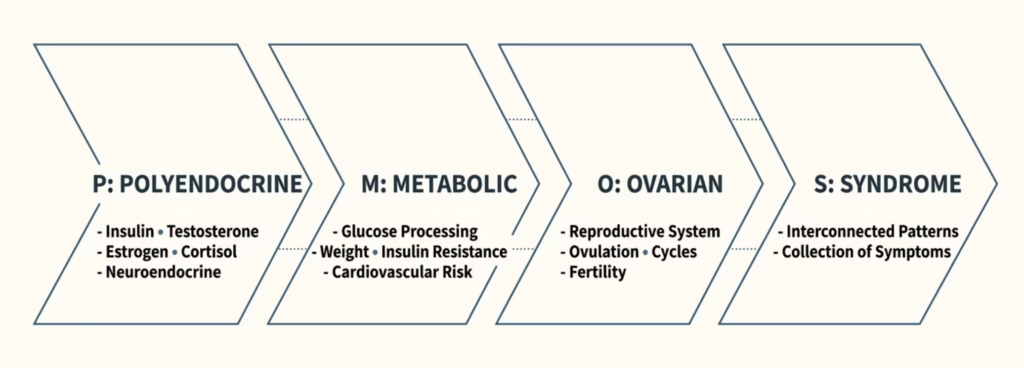
Each component of the name reflects a real, lived dimension of this condition — from the brain’s hormonal signals to the way your cells process energy every single day.
Polyendocrine: Many Hormones
Your endocrine system is your body’s chemical messaging network. While testosterone and estrogen play a major role in PMOS, they aren’t working alone. This condition involves an intricate interplay of multiple hormones, including insulin, stress hormones like cortisol, and neuroendocrine pathways in the brain.
Why “Poly” Matters
The prefix “poly” ,meaning many, signals that no single hormone is the villain. Understanding the full hormonal picture allows your care team to address root causes rather than just managing individual symptoms in isolation.
Metabolic: How Your Body Uses Energy
This is perhaps the most validating addition to the new name. PMOS is profoundly tied to your metabolic health, particularly how your body processes sugar. A vast majority of individuals with this condition experience insulin resistance, meaning cells struggle to absorb glucose from the blood.
Weight Changes
Gradual or sudden shifts in weight that feel disconnected from diet or lifestyle choices are a direct result of disrupted insulin signaling.
Sugar Cravings & Fatigue
Intense cravings for carbohydrates and persistent low energy are hallmark signs of insulin resistance affecting your daily life.
Long-Term Health Risks
Higher long-term risks for type 2 diabetes and cardiovascular disease when metabolic health is not actively supported and monitored.
Metabolic Care
Why Naming It Matters
Acknowledging the metabolic piece ensures that metabolic support, specialized nutrition, and weight management tools are treated as foundational care rather than an afterthought. You deserve a care plan that addresses your energy, your blood sugar, and your long-term vitality from day one.Reproductive Health
Ovarian: Your Reproductive System
The ovaries are still a key part of the picture. The word “ovarian” remains because the hormonal imbalances can still impact ovulation, cause irregular periods, or contribute to fertility challenges. It is simply no longer the only focus, your whole body deserves attention.
How the Shift to PMOS Benefits Your Care
This update is far more than a change in medical vocabulary. It is designed to directly improve your day-to-day healthcare experience and eliminate the stigma that many patients have carried for years.
Faster, More Accurate Diagnoses
Because doctors no longer have to identify “ovarian cysts” to validate your symptoms, diagnostic delays should decrease. Providers can confidently evaluate your full hormonal and metabolic presentation.
A Shift Away from Fertility Stigma
The old name often made patients feel as though their health was strictly tied to their fertility. PMOS centers the conversation on your overall, lifelong wellness instead.
More Holistic Treatment Options
Rather than simply prescribing a birth control pill to regulate your period, a PMOS framework encourages a comprehensive care plan, prioritizing insulin sensitivity, heart health, mental well-being, and advanced metabolic therapies.
Your Health is Connected, and We Are Here to Listen
If you have been navigating irregular cycles, stubborn weight changes, facial hair, adult acne, or overwhelming fatigue, please know this: your symptoms are real, your biology is complex, and you are not to blame.
The transition to PMOS is a meaningful reminder that everything in your body is interconnected. You deserve care that looks at the whole picture — from your hormones to your metabolism to your emotional well-being.
Insulin Resistance Support
Specialized nutrition and metabolic therapies tailored to your unique hormonal profile.
Empathetic Weight Care
Navigating weight changes with compassion, science, and a judgment-free approach.
In-Person & Telehealth
Serving the Olympia area and beyond with flexible telehealth options for your convenience.
Whether you need support managing insulin resistance, navigating weight loss with empathy, or simply want a compassionate provider who understands the latest advancements in hormonal health, you don’t have to walk this path alone. Reach out to NiuOla Health today to schedule a supportive, comprehensive consultation with Dr. Tui Lauilefue. Together, we will build a personalized care plan that helps you feel vibrant, empowered, and fully understood.
