
The Importance of Sleep During Your Weight Loss Journey
March 9, 2026
Beyond Diet and Exercise
When most people think about weight loss, the conversation almost always centers on two pillars: diet and physical activity. While both are undeniably important, emerging research has spotlighted a third, often overlooked factor that may be just as powerful: sleep.
Science is now revealing that the quality and quantity of your sleep directly influence how your body processes food, stores fat, and manages hunger. Without adequate rest, even the most disciplined meal plans and rigorous workout routines can fall short of their potential.
- Metabolism
- Sleep governs how efficiently your body converts food into energy
- Appetite
- Rest regulates the hormones that control hunger and fullness signals
- Calorie Intake
- Better sleep is linked to naturally consuming fewer calories each day
Sleep isn’t just recovery. It’s an active, essential component of every successful weight loss strategy.

How Sleep Regulates Appetite and Metabolism
Sleep deprivation sets off a cascade of biological changes that make weight loss significantly harder. Understanding these mechanisms is the first step to taking control.
Ghrelin Surge
Sleep deprivation increases ghrelin, the hunger hormone, making you feel ravenous even when your body doesn’t need fuel.
Reward Center Activation
Lack of sleep lights up the brain’s reward centers, driving intense cravings for high-calorie, sugary, and fatty foods.
Calorie Reduction
Studies show that even 30 extra minutes of sleep can reduce daily calorie intake by approximately 270 calories.
Metabolic Health
Poor sleep can induce prediabetes markers even in otherwise healthy adults, disrupting blood sugar regulation.
Scientific Evidence Linking Sleep and Weight Loss
The link between sleep and weight is not merely anecdotal. It is supported by robust clinical research from leading institutions around the world.
University of Chicago Study
Research demonstrated that participants spending 8+ hours in bed showed significantly lower calorie intake and better long-term weight maintenance compared to sleep-restricted groups.
Clinical Trials
Controlled trials consistently confirm that sleep restriction leads to increased food intake and measurable weight gain, even without changes in activity level.
Energy Expenditure
While the effect on energy expenditure varies, sleep deprivation consistently increases hunger and total calorie consumption across multiple studies.
Longitudinal Research
Long-term studies associate chronic short sleep (under 6 hours) with a significantly higher risk of obesity across all age groups.
The Hormonal Symphony: Leptin and Ghrelin

Two powerful hormones orchestrate the delicate balance between hunger and satiety. When sleep is compromised, this hormonal symphony falls out of tune, with serious consequences for your waistline.
🟢 Leptin: The Fullness Signal
Leptin is produced by fat cells and signals your brain that you’ve had enough to eat. Sleep loss lowers leptin levels, reducing your feeling of satiety and making it harder to stop eating.
🔴 Ghrelin: The Hunger Signal
Ghrelin is produced in the stomach and tells your brain you’re hungry. Sleep deprivation causes ghrelin to spike, intensifying hunger and food-seeking behavior throughout the day.
⚖️ The Imbalance Effect
When leptin drops and ghrelin rises simultaneously, the resulting hormonal imbalance disrupts energy balance, favoring increased calorie consumption and fat storage, a recipe for weight gain.
Sleep Quality and Weight Loss: More Than Just Hours
It’s not just about how long you sleep, but how well you sleep matters enormously. Spending eight hours in bed won’t help if your rest is fragmented, shallow, or frequently interrupted.
Healthy Sleep Habits for Weight Loss
- Consistent Schedule – Go to bed and wake up at the same time every day, including weekends
- Dark Environment – Use blackout curtains and minimize light exposure to promote melatonin production
- Avoid Heavy Meals – Finish eating at least 2–3 hours before bedtime to prevent disrupted sleep
- Cool Temperature – Keep your bedroom between 65–68°F (18–20°C) for optimal rest
Challenges for People Working Odd Hours
For the millions of shift workers, night-shift employees, and those with irregular schedules, achieving quality sleep is an uphill battle. The consequences for weight management are significant and well-documented.
Did you know? Approximately 20% of the global workforce engages in some form of shift work, placing them at disproportionately higher risk for obesity and metabolic disorders.
Circadian Disruption
Shift workers experience misalignment of their internal body clock, disrupting hormonal cycles that control hunger, metabolism, and fat storage.
Metabolic Risk
Irregular sleep patterns significantly increase the risk of obesity, type 2 diabetes, and cardiovascular metabolic disorders.
Late-Night Eating
Studies show shift workers consume more calories late at night, when the body’s metabolism is least efficient at processing food.
Strategies for Shift Workers
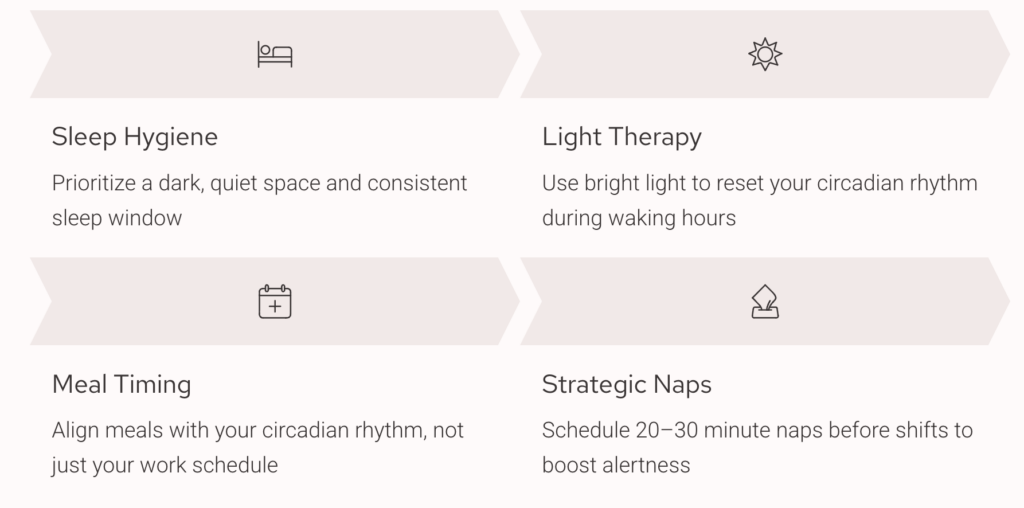
Practical Tips to Harness Sleep for Weight Loss Success
The science is clear. Better sleep leads to better weight loss outcomes. Here are actionable steps you can implement starting tonight to transform your sleep and accelerate your results.
Aim for 7–9 Hours
Prioritize quality sleep nightly. Research shows even small increases in sleep duration yield meaningful reductions in calorie intake and cravings.
Set a Consistent Schedule
Establish a fixed bedtime and wake time, even on days off. Consistency reinforces your circadian rhythm and improves sleep quality over time.
Limit Caffeine and Screens
Cut caffeine by early afternoon and reduce blue light exposure at least one hour before bed to support natural melatonin production.
Practice Relaxation Techniques
Incorporate deep breathing, meditation, or gentle stretching to improve sleep onset and the depth of your rest each night.
Monitor and Adjust
Track your sleep patterns using a journal or app. Use the data to identify and adjust lifestyle factors that may be undermining your rest.
Real-World Impact: Case Studies and Success Stories
The science translates directly into real-world results. Across clinical settings and everyday life, prioritizing sleep has proven to be a game-changer for weight management.
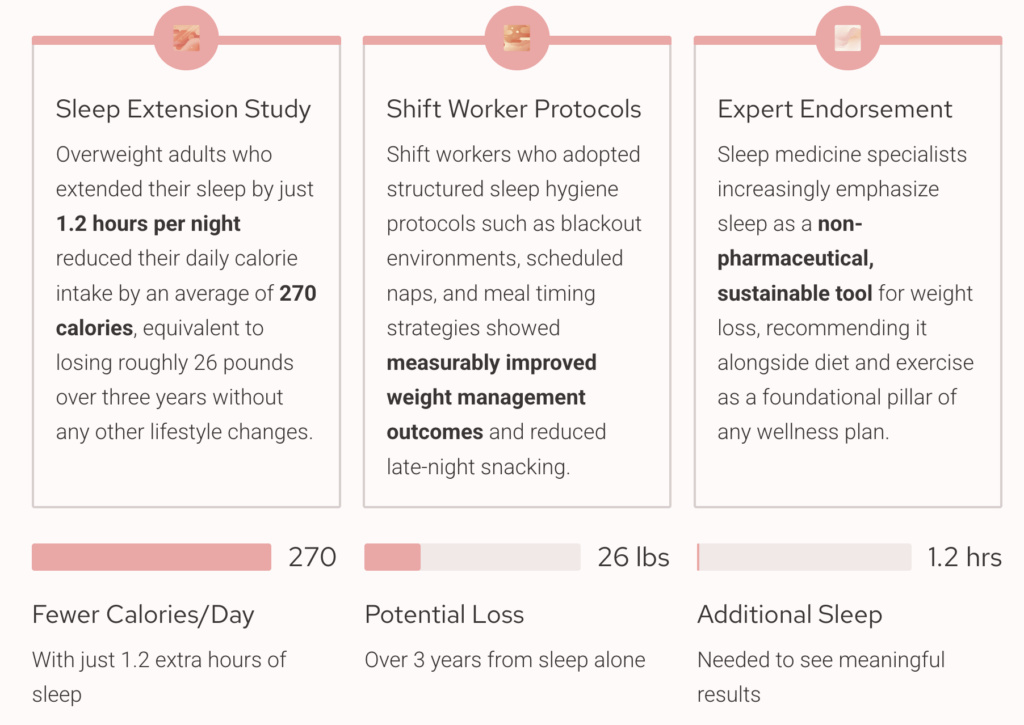
Sleep as a Pillar of Weight Loss and Health
Sleep is far more than passive rest. It is a powerful, natural regulator of appetite, metabolism, and energy balance. When you prioritize sleep, you create the biological conditions that make weight loss not just possible, but sustainable.
Amplify Your Efforts
Quality sleep enhances the effectiveness of both diet and exercise, multiplying your results
Address Unique Challenges
For those with irregular schedules, targeted sleep strategies are vital to managing weight
Build a Foundation
Embrace sleep as a core, non-negotiable habit on your weight loss journey
The path to lasting weight loss doesn’t just run through the gym and the kitchen — it runs through the bedroom. Prioritize your rest, and your body will thank you.
Important Disclaimer & About Us
Disclaimer: This document provides information solely for educational and informational purposes, and it does not represent medical advice. Always seek the advice of your qualified healthcare provider with any questions you may have regarding a medical condition or treatment, and before undertaking any new healthcare regimen.
Dr. Tui Lauilefue is board-certified in internal medicine and obesity medicine and a Menopause Society-certified practitioner. She is committed to providing comprehensive and compassionate care to her patients.
To learn more about our patient-centered approach to wellness and specialized care (direct primary care model), please visit our website at niuolah.com.
We are located in Olympia, WA, serving our community with dedicated health services.
